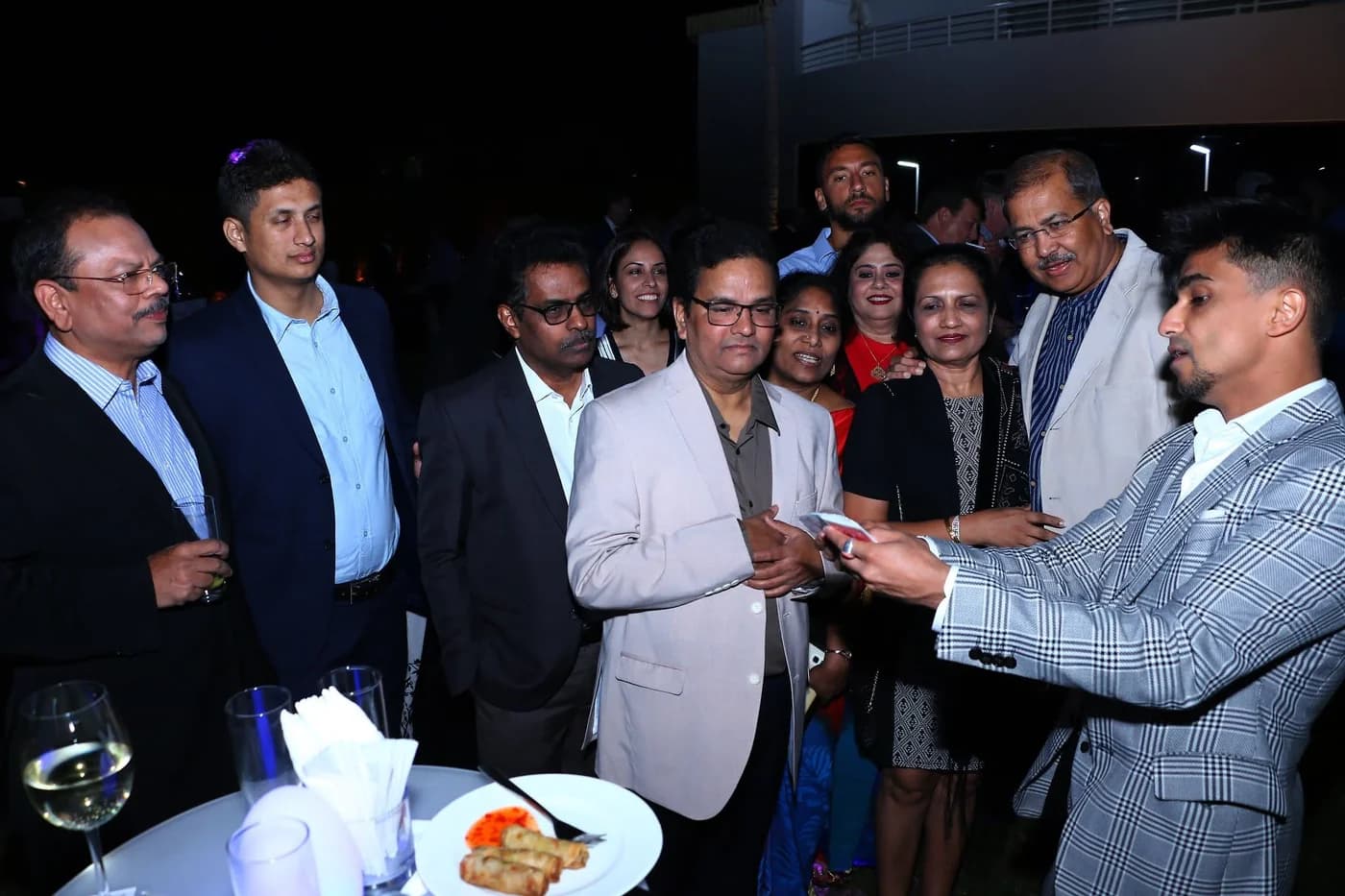
On 4 November 2026, I performed for 39 Essex Chambers at their Dubai opening reception. There were magic tricks, surprised reactions and people enjoying themselves together. For me, though, the story had started well before I arrived.
It began with research, an email and an idea about how my magic might fit their evening.
What made this opportunity particularly interesting was the role AI played in helping me find it. I have been learning to use AI agents and research tools to discover events, find relevant contacts and prepare more thoughtful approaches to potential clients. This booking gave that learning a very real destination: an evening performing for barristers in Dubai.
The work that happens before the performance
People usually see the performance. They see the cards, the reactions and the moment when something apparently impossible happens in front of them.
They rarely see the work involved in getting there.
As an independent performer, I also have to find opportunities, introduce myself, explain what I offer and follow up. Some days, that means spending more time looking at a laptop than practising magic.
Previously, finding a promising event could involve searching through websites, reading announcements, checking company pages and trying to work out who was organising it. Even after finding a name, I might still need to locate a suitable email address and decide what to say.
That research matters. But it can take hours, and there is no guarantee that the person you contact is planning anything suitable.
Learning to use AI for something practical
I became interested in a simple question: could AI help me do this work better?
Not just write a polished paragraph. Could it help me find a real opportunity, understand why it might suit my performance and prepare a useful introduction?
That question has led me into learning about tools such as Apollo, Codex and Grok, alongside AI-assisted research and email workflows. I am exploring how different tools can support different parts of my business, from researching potential clients to improving my website.
I am still learning. Sometimes the results are useful immediately. Sometimes they need correcting, checking or starting again with a clearer instruction.
But the difference in how quickly I can move from a question to something worth investigating has been exciting.
Finding a reason to get in touch
The most useful change has been moving beyond a broad search for companies that might book a magician.
An opening reception is a reason to get in touch. The same goes for other corporate events, such as a client evening, an awards dinner or a product launch. There is an occasion to understand and a practical question to answer: how could a performance contribute to it?
That was the thinking behind my approach to 39 Essex Chambers.
Their Dubai opening reception gave me something specific to respond to. I could suggest short, interactive performances as guests mingled, fitting around conversations and the flow of the evening.
It was a straightforward idea. The magic would come to the guests, without needing everyone to stop what they were doing for a formal stage show.
An email still needs a human idea
Finding a contact is only part of the job.
I still need to decide whether the opportunity makes sense and whether I have something relevant to offer. An email can be beautifully written and still give its recipient no reason to reply.
For me, the better approach is to understand the occasion, explain the idea simply and make it easy to continue the conversation.
In this case, that conversation developed with Sonal and Niamh at 39 Essex Chambers and led to the booking.
I would not describe that as pressing a button and letting technology run my business. There were people making decisions on both sides. AI helped with the work around the introduction; the conversation and the performance were still mine to deliver.
Performing for barristers
There is something enjoyable about the thought of performing magic for barristers. These are people whose work involves examining arguments, questioning explanations and paying attention to detail.
Would my tricks survive cross-examination?
That was a playful thought to bring into the evening. My aim, of course, was to entertain the guests and give them something enjoyable to experience together.
They loved the tricks and had a great time. Seeing that response was the most rewarding part of the booking.
A performance brings a different kind of energy into a reception. For a few moments, people have a shared focus. They watch, react and turn to one another. A conversation that began with introductions can suddenly have something unexpected at its centre.
From the laptop to the room
What stayed with me was the connection between those two very different parts of my work.
At one end was a screen: research, possible opportunities, an email draft and a conversation about an event.
At the other was a room full of people experiencing magic in person.
That is why this use of AI interests me so much. It can support something very human. The research has a purpose beyond producing another document or a longer list of contacts.
It can help me reach someone I might otherwise never have found, explain an idea and create the opportunity to perform.
The final measure is whether I can deliver an experience that makes the booking worthwhile.
Faster does not mean finished
I am enthusiastic about these tools, but I am also learning where to be careful.
A suggested contact may be wrong. An event announcement may be out of date. An email draft may sound convincing while saying very little.
I still need to check details and read what I am putting my name to. If a message does not sound like me, it needs work. If I cannot explain why my performance suits an event, more polished wording will not solve that problem.
The time saved on research gives me more room for those decisions. It also gives me more time for the work I want to be doing: developing ideas, preparing performances and meeting people.
Why I am excited about what comes next
I do not know exactly how AI will change my business over the next few years. I do know that learning to use it has made me more curious about what is possible.
As a magician, I am used to practising something unfamiliar until it becomes useful. Working with these tools has a similar rhythm: try an approach, notice what failed, adjust it and try again.
There is a lot to learn, and that is part of the appeal.
The 39 Essex Chambers reception gave me a concrete example of where this learning can lead. An opportunity found through AI-assisted research became a conversation, then a booking, then an evening of magic.
I am excited to keep exploring that connection between new technology and live experiences. There are more ideas to develop, more people to meet and more rooms in which to perform.
And, hopefully, a few more tricks that can stand up to cross-examination.
Planning a corporate reception, client evening or celebration in Dubai? Tell me about the occasion, and we can explore how magic could fit your event.